Thinking about dental treatment in Spain?
Download our free guide for UK patients.
Understanding Dental Tourism
Why choose dental care abroad?
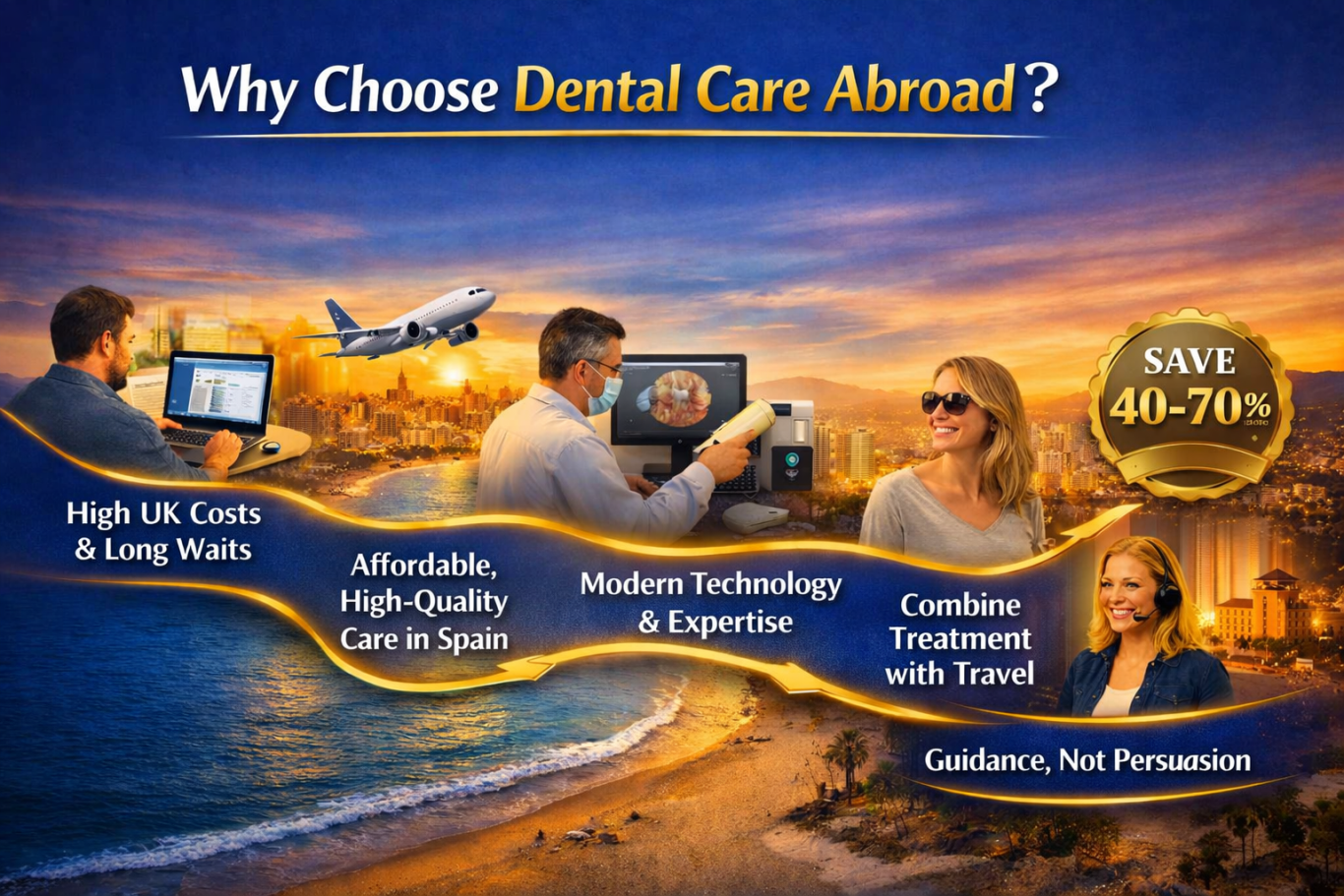
Dental tourism refers to travelling to another country to receive dental treatment, often because treatment may be more affordable, available more quickly or offer better value than at home. Many patients choose this option to avoid long waiting lists and high private fees in the UK. In some countries, dental treatments can cost up to 70% less, even after factoring in flights and accommodation, making complex procedures such as veneers, crowns, implants, and full‑arch restorations far more accessible.
Patients also benefit from shorter treatment timelines, modern technology, and clinics that follow strict international standards of care.
For many people, dental tourism turns a necessary appointment into a more positive experience by combining treatment with a short break. Instead of multiple visits spread over months, patients often receive efficient, well-planned care within a structured timeframe.
Perfect Smile UK → Spain acts as a non-clinical coordination service, helping patients connect with carefully selected partner clinics supporting communication, and guiding logistics from start to finish. This ensures the entire journey is more organised, easier to navigate and supported throughout
In simple terms, dental tourism allows patients to access high-quality dental treatment at competitive prices while enjoying a well-managed experience.
Why many UK patients choose Spain for dental treatment.
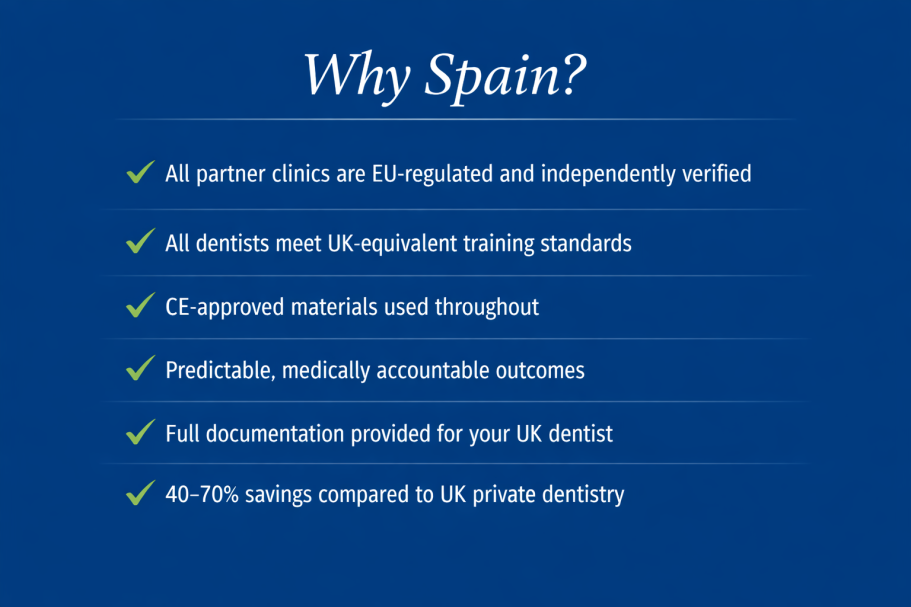
Choosing where to have dental treatment is a major decision, especially when investing in life‑changing procedures such as veneers, crowns, implants, or full‑arch restorations. While many destinations are popular, different countries operate under different clinical, legal and regulatory frameworks, so it is important to research your options carefully.
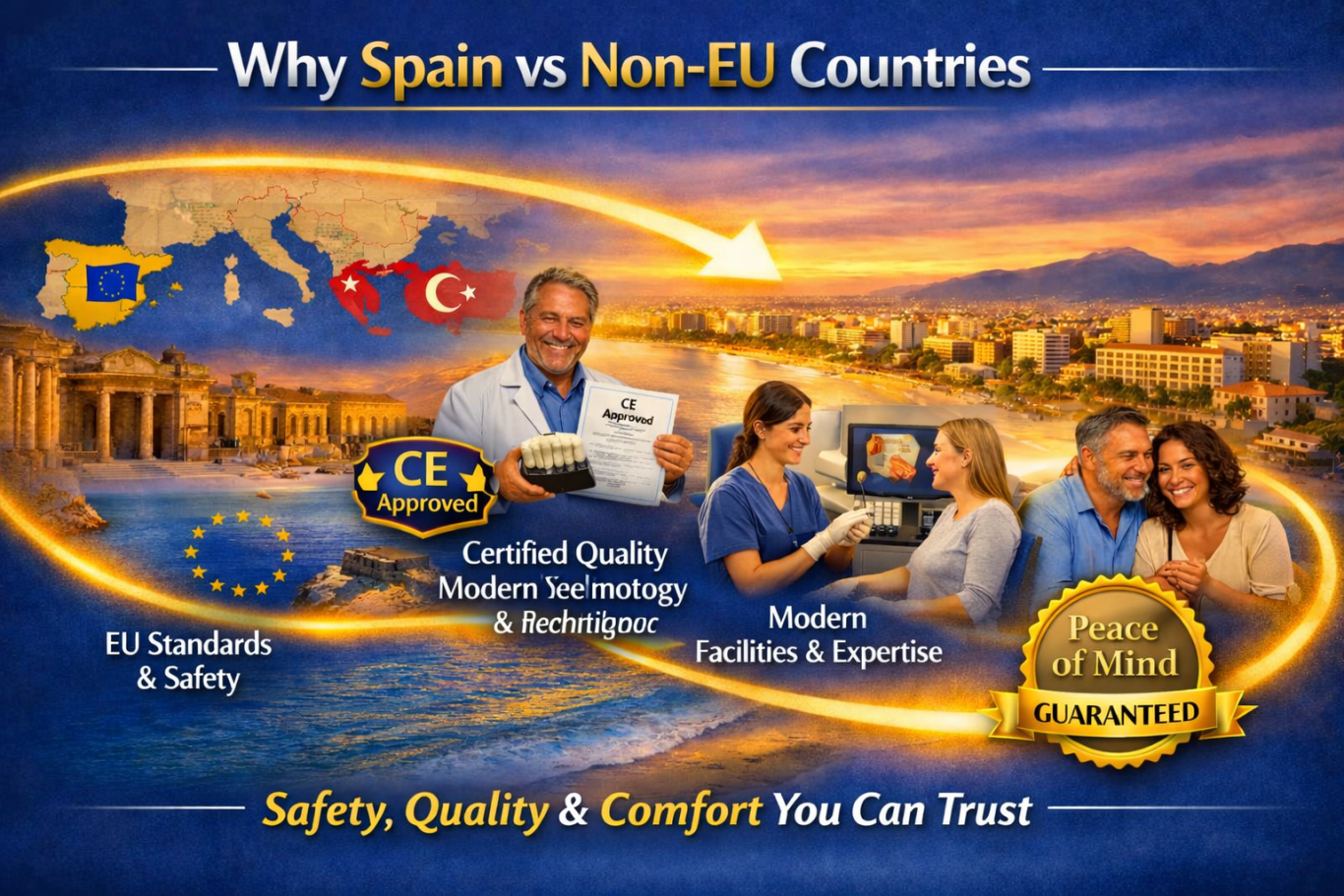
1. Spain Follows European Law - Non European Countries Do Not
Spain operates under strict EU healthcare regulations, patient safety laws, sterilisation standards, and professional accountability frameworks. Non European countries are not part of the EU, meaning clinics are not required to follow the same legal protections, oversight, or enforcement mechanisms.
In Spain, patients benefit from EU-level consumer protections, healthcare regulations and established complaint procedures, medical standards, and transparent complaint pathways essential when undergoing complex dental work.
2. Spanish dentists train within recognised European frameworks
A Spanish trained dentist completes the same length of training as a UK dentist and meets EU aligned educational standards. Professional qualifications obtained within EU member states are subject to mutual recognition frameworks, although registration requirements vary by country., and a Spanish dentist can legally work in the UK without taking any additional exams or conversion courses.
Non EU training and qualifications are not equivalent to UK or EU standards, and they cannot practise in the UK without extensive retraining and examinations.
3. The importance of regulation and transparency
In the UK, dentistry is held to some of the highest clinical and regulatory standards in the world.
Dental treatment is a long‑term investment, and choosing a country with no EU oversight, variable training standards, and inconsistent regulation makes it especially important to research clinic credentials, clinician experience and patient support arrangements.
Spain offers:
- Regulated clinics
- EU trained dentists
- Digital workflows
- Medically accountable systems
Non European countries do not offer the same guarantees.
4. Competitive pricing within a regulated environment
Depending on the treatment required, patients may find that treatment costs in Spain are significantly lower than those of UK private dentistry. similar to many non European destinations but without sacrificing regulation, training, or clinical standards.
Patients get affordability and safety, not affordability instead of safety.
5. Modern Technology and European Clinical Standards
Many Spanish clinics use:
- CBCT scanning
- Intraoral digital impressions
- Guided implant surgery
- CE‑approved materials
These technologies are widely used in modern dental practices throughout the UK and Europe.
As with any destination, patients should confirm which technologies, materials and regulatory standards their chosen clinic follows, and materials may not always meet EU certification.
The Bottom Line
Choosing dental treatment abroad requires careful research and informed decision-making. When patients invest thousands into their smile, they deserve:
- Clear regulatory frameworks.
- Clinicians working within European regulatory frameworks.
- Transparent treatment planning.
- Legal protection.
For many UK patients, Spain offers a combination of regulated care, modern technology, transparent pricing and convenient travel options.